Guide 1 of 8 · Week 1: Getting started
How to Start Meditating: Your First Week
You don't need a quiet mind, a special cushion or an hour a day. You need a time, a place and five minutes. Here is how to begin.

Meditation is simply training your attention to rest in one place, and letting the mind grow quiet there. It’s a skill, not a talent. Like any skill, the first week is about showing up, not about getting it “right”.
This guide is the first step of 4 Weeks of Easy Bliss, the program in the Bliss app. Below you’ll find why people meditate, a simple first practice, how to find a regular time, and how to make the habit easy to keep.
Why meditate?
People come to meditation for all sorts of reasons: a mind that won’t switch off at night, a stressful job, a wish to be more patient at home, or plain curiosity.
Research is still growing, but studies suggest meditation can help with stress, anxiety and sleep. The US National Center for Complementary and Integrative Health has a balanced summary. People who keep at it often say they:
- react less sharply when things go wrong
- find it easier to focus
- fall asleep more easily
- feel a quiet contentment that doesn’t depend on how the day went
For the yogis who developed it, meditation was mainly a way inward, a way to understand the mind and find out who you really are. You don’t need to share that aim to begin. But it’s good to know the practice was built for depth, not only for quick relief.
Step 1: Start with five minutes
Five minutes is enough to learn the basic movement of meditation: rest your attention, notice when it wanders, and bring it back. That’s the whole practice, done again and again.
Here is a simple first sitting.
Try it now
Your first five minutes
- Sit upright and comfortable, hands resting in your lap. Close your eyes.
- Take three slow breaths, a little longer on the out-breath. Let your shoulders drop.
- Rest your attention on the breath where you feel it most: the nose, the chest, or the belly.
- When you notice you've drifted into a thought, a plan or a memory, say "thinking" silently and come back to the breath.
- After five minutes, open your eyes slowly. Sit for a moment before you get up.
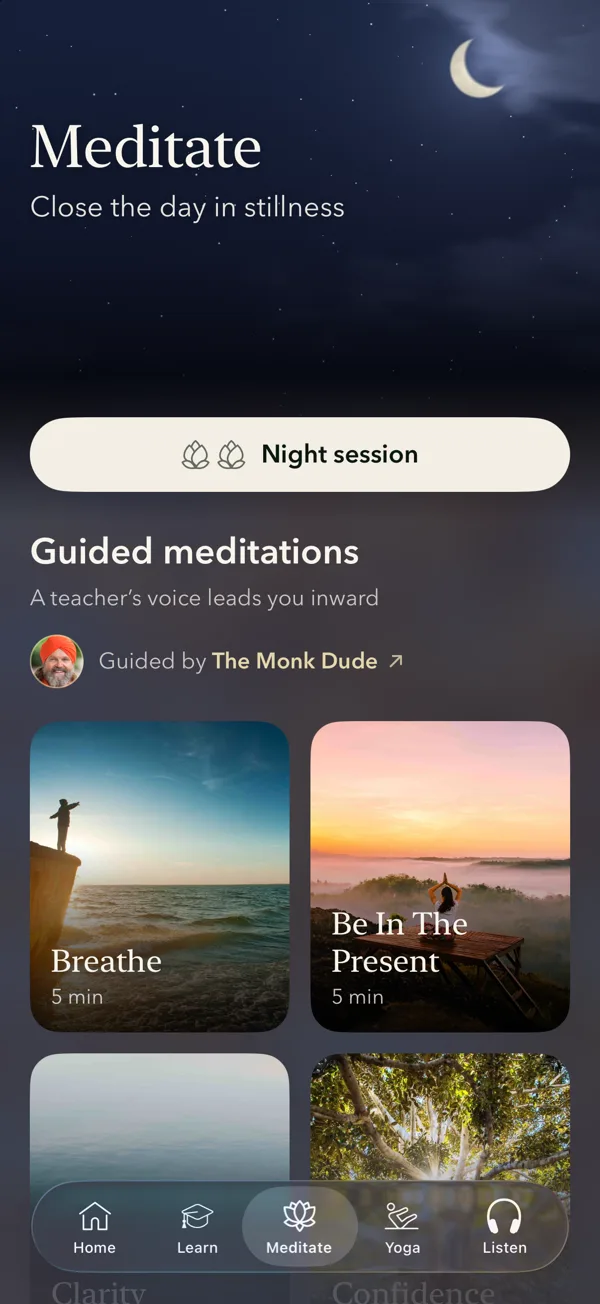
In Bliss, a session can start with a few minutes of soft mantra music to gather the mind, then move into silence with gentle bells. Many beginners find that easier than starting in silence.
Step 2: Give it a regular time
Choose one time of day you can keep all week, and treat it like an appointment with yourself. Many people like early morning, while the house is still quiet. If mornings are rushed, try the moment you get home, or the half hour before dinner. The best time is the one you’ll actually keep.
Link it to something that already happens every day. “When I park the car at home, I sit for five minutes before I go in.” “When I come home, before I check my phone, I sit.” The old habit becomes the reminder for the new one.
Step 3: Make it easy to keep
Most new habits fade not because people stop caring, but because starting takes a little too much effort each day. So make starting as easy as you can.
- Have a spot that’s ready. A chair by a window or a cushion in a quiet corner is plenty. Leave it where you’ll see it, and put your phone on Do Not Disturb before you sit. The next guide covers how to sit.
- Keep it short on purpose. On a busy day, two minutes still counts. The aim this week is to sit every day, not to sit for long.
- Mark each day you sit. A tick on a paper calendar works, and so does a streak in an app. Watching the days add up is quietly encouraging.
- If you miss a day, just sit the next one. A gap doesn’t undo anything. Coming back is what counts, and coming back is also the whole skill of meditation.
- Don’t grade your sittings. Restless, sleepy or busy-minded: these are all normal sittings. You don’t score a walk. You just take it.
You don't have to feel calm to have a good sitting. You only have to sit.
Your first week at a glance
Rest days aren’t a break from the habit. They make it last. In the program, you meditate morning and evening on practice days and simply rest on the others.
What comes next
Once you’ve sat a few times, two questions come up for almost everyone: How should I sit? and Am I supposed to think of nothing? The next guide answers both.
Ready the body
Today’s yoga: Gentle poses to wake up the body
In the program, this lesson comes with 4 poses to do before you sit. Each one has a short video in the app that shows you how.
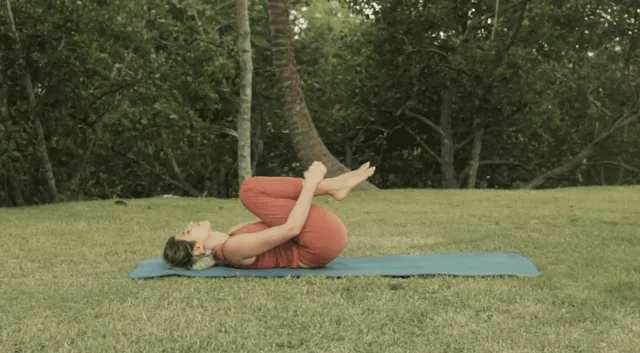 Wake Up PoseUtksepa MudraLifts morning sluggishness
EasyPractice in bed on waking. Rise slowly if prone to dizziness
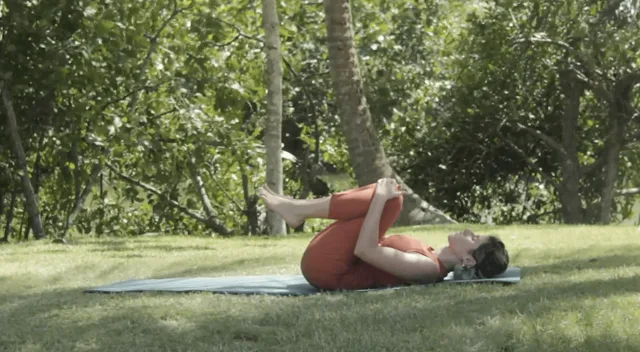 Bellows PoseBhastrikasanaCalms and settles the mind
EasyAvoid with hernia or recent abdominal surgery
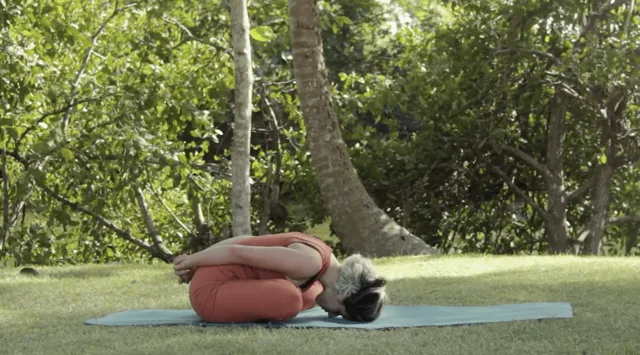 Seated BowYogamudraStrengthens willpower
EasyAvoid with glaucoma. Go gently with back, disc or knee problems
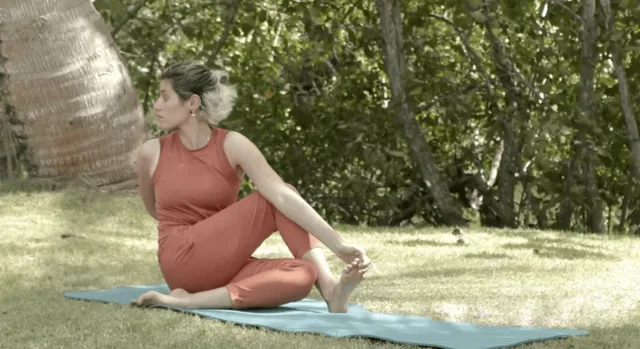 Spinal TwistMatsyendrasanaBrings calm and inner peace
EasyTwist gently with spine or disc problems or recent abdominal surgery. Avoid in the 2nd and 3rd trimesters of pregnancy
Move slowly and stop if anything hurts. Skip any pose whose caution applies to you. If you have a health condition or are pregnant, check with your doctor before starting a new practice.
Questions people ask
How long should a beginner meditate?
Start with five minutes once a day. When that feels easy, add a few minutes or a second sitting in the evening. Sitting every day matters far more than sitting for a long time.
What is the best time of day to meditate?
Whenever you will really do it. Many people like early morning, while things are quiet. The evening, before dinner or bed, makes a good second sitting.
Is it a problem if I can't stop thinking?
No. Everyone's mind wanders, especially at first. Meditation isn't the absence of thoughts. It is noticing that you drifted and gently coming back. Each return is one repetition, like a step on a walk.
Do I need an app to meditate?
No. A timer and a quiet corner are enough. An app helps by giving you guidance, a regular rhythm and gentle reminders, which is often what makes a habit last.