Guide 2 of 8 · Week 1: Getting started
How to Sit for Meditation (and Do You Have to Think of Nothing?)
A cushion, a chair or your knees: any of them will do. Sit tall, rest your hands, and let thoughts come and go. Here is how.
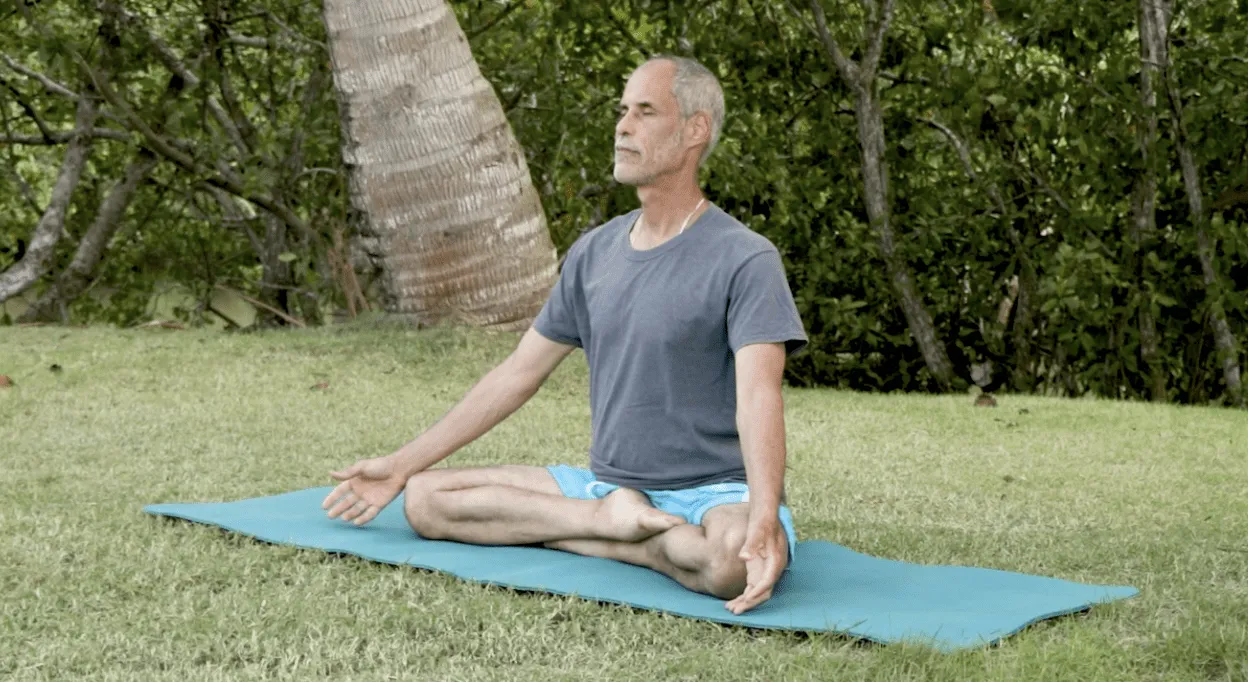
There is no single right way to sit for meditation. Sit on a cushion, kneel, or use a chair, with your back upright and your body still. And no, you don’t have to think of nothing. You only have to keep coming back.
This guide is Week 1, Day 5 of 4 Weeks of Easy Bliss, the program in the Bliss app. Below you’ll find three easy ways to sit, what to do with each part of your body, what really happens with thoughts, and how to meet the feelings that come up.
Why posture matters
Posture changes how awake you feel. Try it now: slump for a few breaths, then lift your chest and let your spine grow tall. Most people notice the mind brightens a little. Body and mind move together. When one sags, the other tends to follow.
An upright back also lets you breathe more fully and stay alert without effort. That is what you want in meditation: relaxed, but not sleepy.
Stillness helps as well. Each time you shift, scratch or fidget, your attention goes outward again. A comfortable seat you can hold without moving gives the mind a chance to settle.
Three easy ways to sit
Pick the one that feels kind to your body today. You can change it any time.
- Cross-legged on a cushion. Sit on the front half of a firm cushion or a folded blanket, so your hips are a little higher than your knees. This tips your pelvis forward and lets your back stand up on its own. If your knees hover well above the floor, add a little more height.
- Kneeling. Kneel and sit back on a cushion or a small bench placed between your heels. This is gentle on the hips and keeps the back straight with little effort.
- On a chair. Sit near the front edge of a firm, straight-backed chair, feet flat on the floor, without leaning back. This is a perfectly good way to meditate, not a lesser one.
Advanced cross-legged poses are fine if they come easily to you, but they aren’t required. The best seat is simply the one you can stay still in for the whole sitting. There is no prize for sitting in pain.
Back, hands, eyes and chin
Once you’re seated, run through a few quick checks.
- Shoulders and face. Let your shoulders drop, and let your face go soft, especially around the jaw and between the eyebrows.
- Back. Let it rise straight up from the hips, the way a stack of blocks balances. Tall, but not stiff.
- Head. Let your chin dip slightly so the back of your neck feels long, with your head resting on top of the spine rather than pushed forward.
- Hands. Rest them wherever they feel easy, in your lap or on your thighs. They shouldn’t have to hold anything up.
- Eyes. Close them gently. If that feels strange at first, leave them half open, resting on the floor a little way ahead.
Put together, these small choices give you a quiet, steady shape to sit in. With less going on in the body, the mind has fewer reasons to wander off, and it’s easier to stay with what you chose to rest on.
Do you have to think of nothing?
This is the question almost every beginner asks, and the answer is a relief: no.
Try to force your mind empty and watch what happens. It gets louder. Telling yourself “don’t think” is itself a thought.
Meditation works a different way. You give the mind one simple thing to rest on, like the breath or a mantra, and you let everything else drift past. Thoughts will still come. That’s what minds do. You don’t fight them, and you don’t follow them. You notice, and you return.

Over time, the gaps between thoughts get longer on their own. You can’t make that happen by pushing. It comes from resting your attention, again and again, on the same quiet point.
You're not trying to empty the mind. You're giving it a better place to sit.
When feelings come up
Sometimes you sit down to relax and up comes sadness, worry or old anger. This surprises a lot of people, but it’s normal. When you finally stop and get quiet, feelings you’ve been too busy to notice have room to show up.
You don’t have to fix them, and you don’t have to push them away. Let the feeling be there, like weather passing through. Breathe a little more slowly. Then bring your attention back to its resting point.
A good resting point is the middle of your chest, the place people touch when they say “me”, or when they are moved. Yogis have long called it the heart center. Many people find that resting their attention there helps hard feelings soften, and over weeks of practice some notice a steady warmth there: kindness toward others, and toward themselves.
If a feeling is very strong, it’s fine to open your eyes, take a few breaths and stop for today. Meditation is meant to be gentle. If hard feelings keep coming, talking with a friend, a teacher or a counselor can help.
Try it now
Five minutes of sitting well
- Choose your seat: cushion, kneeling or chair. Get your hips settled and your back upright.
- Rest your hands in your lap, one on the other. Tip your chin down a little and close your eyes.
- Take three slow breaths and let your body grow still. Notice the sounds and sensations, then let them fade into the background.
- Bring your attention to the middle of your chest. Breathe there gently, as if the breath goes in and out of your heart.
- When a thought or feeling pulls you away, notice it kindly and come back to the chest. Do this as many times as you need.
If you’d like a voice to guide you, the Bliss app has guided meditations by Dada Nabhaniilananda (The Monk Dude), the teacher of this program.
What comes next
Now you know how to sit. Next week we look at what stress does in the body, and how a short pause and a few minutes turned inward can help you respond instead of react. Read the next guide.
Ready the body
Today’s yoga: Build your strength
In the program, this lesson comes with 3 poses to do before you sit. Each one has a short video in the app that shows you how.
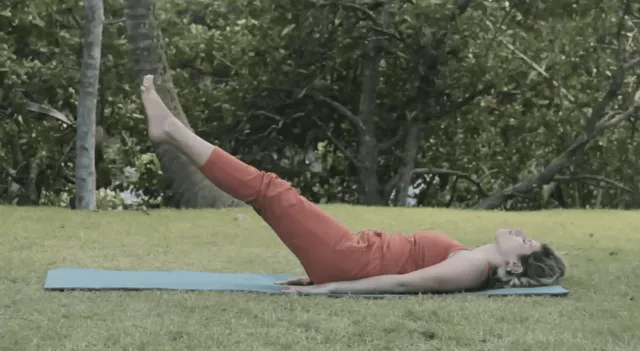 Easy Camel PoseUstrasanaSteadies focus
EasyGo gently with lower back problems or recent abdominal surgery
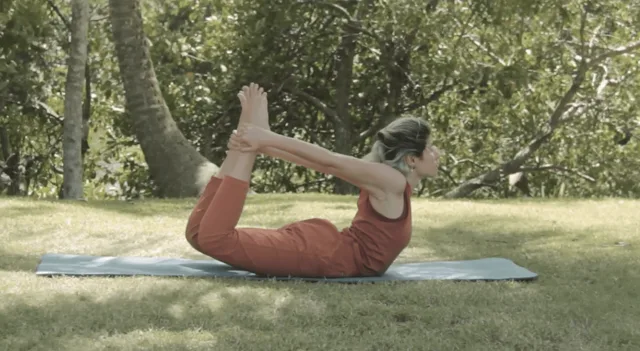 Boat PoseNaukasanaBrings peace and calm
EasyAvoid with back or disc problems, hernia or recent abdominal surgery. Avoid in the 2nd and 3rd trimesters of pregnancy
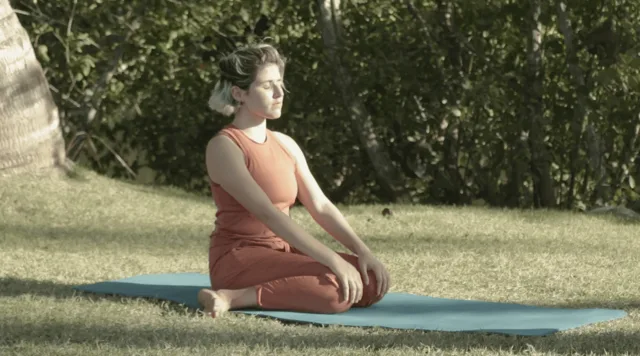 Thunder PoseVajrasanaRelaxes and settles the mind
MediumGo gently at first and never force the posture. Use a cushion with knee or ankle problems
Move slowly and stop if anything hurts. Skip any pose whose caution applies to you. If you have a health condition or are pregnant, check with your doctor before starting a new practice.
Questions people ask
Do I have to sit cross-legged to meditate?
No. Cross-legged on a cushion, kneeling, and sitting on a firm chair all work. What matters is that your back is upright and you can stay still and comfortable for the whole sitting.
Am I supposed to think of nothing?
No. Trying to force the mind empty usually makes it busier. Meditation gives the mind one gentle thing to rest on, like the breath or a mantra. Thoughts will come. Each time you notice and come back, you are doing it right.
Is it okay to cry or feel upset while meditating?
Yes. When you sit still, feelings you have been too busy to notice can rise up. Let them be there, breathe, and keep your attention resting softly in your chest. If something feels too strong, open your eyes and take a break. A friend, teacher or counselor can help too.
Can I meditate lying down?
You can, but most people drift off to sleep. Sitting upright keeps you relaxed and awake at the same time, which is the balance meditation needs.