Guide 8 of 8 · Week 4: Going deeper
What to Do With Thoughts in Meditation (and How to Make It Last)
Thoughts will come. That's fine. Here is what to rest your mind on, how to meet a wandering thought, and how a small daily habit becomes part of you.

When thoughts come up in meditation, don’t fight them. Notice the thought, let it be, and gently bring your mind back to what you chose to rest on: your breath, a mantra, or a warm, uplifting idea. That small act of coming back, done again and again, is how meditation grows. And doing it every day is how it lasts.
This is the last guide in 4 Weeks of Easy Bliss, the program in the Bliss app. It goes with Week 4, Day 6. Below you’ll find what to think about, what to do with a busy mind, and how to keep going after the four weeks end.
What to think about when you sit
A sitting goes better when your attention has a home base, one thing you’ve decided to come back to. It doesn’t need to be clever. It needs to be simple, pleasant and easy to find again. Good choices:
- The breath, felt at the nose, chest or belly.
- A mantra, like Baba Nam Kevalam, repeated silently with its meaning: love is all there is.
- A warm, uplifting feeling, such as the memory of a moment of deep peace.
Pick one and keep it for the whole sitting. Switching around gives the mind one more reason to wander.
Why what you return to matters
What you dwell on tends to color how you feel. Spend an evening replaying an argument and you go to bed tense. Spend a few minutes with something kind and steady and you may get up a little softer. Meditation uses this on purpose: you choose a good place for your attention, and each time a worry pulls you off, you steer back.
What to do when thoughts keep coming
Thoughts aren’t the enemy. They’re just the mind doing what minds do. Treating them as a problem only makes you tense. Here is a gentler way.
- Notice. “Ah, I’m planning dinner.” Noticing is already a moment of awareness.
- Name it, lightly. A single word, like “thinking”, “worry” or “memory”, is enough.
- Let it go by. You don’t need to argue with the thought or finish it. Let it ring out, the way you let a phone ring when you’re busy.
- Return. Come back to your home base, without blame.
A thought is not an interruption of meditation. Coming back from it is the meditation.
If the same thought keeps coming back, that’s fine too. Return each time. Some days you will return a hundred times. Those are good sittings.
Try it now
Count your returns
- Sit and settle for a few breaths, eyes closed, back upright.
- Choose your home base: the breath, the mantra or a warm feeling.
- Each time you notice you've drifted and come back, count one, silently. Then carry on.
- Don't try to keep the number low. A high count means you noticed a lot, and noticing is the skill.
- After ten minutes, sit for a moment and notice how you feel before you get up.
How the way back gets easier
Picture a field of tall grass. The first time you cross it, you can barely see where you walked. Cross the same way often, and a trail starts to show. In time it becomes a clear path, and your feet find it without thinking.
Coming back to calm can work in a similar way. At first, each return takes effort. With regular practice, many people find the way back gets easier to find and quicker to take.
Be patient with yourself
Progress in meditation isn’t a straight line. Some weeks you sit down and settle quickly. Other weeks every sitting feels busy. That’s normal, and it doesn’t mean you’re doing it wrong.
What helps most is simply to keep sitting through the bumpy weeks. A plain, ordinary sitting still counts.
How to keep going after four weeks
The program ends; the practice doesn’t have to. These simple habits keep it alive.
- Keep your time. Sit at the same time each day, so you don’t have to decide again.
- Short and daily beats long and rare. Ten minutes every day does more than an hour once a week.
- Change things up when it feels stale. Try a guided session, sit outside, or start with a few minutes of music. A small change can bring the interest back.
- Track it kindly. Set a daily goal, watch your streak grow, and let a gentle reminder nudge you on busy days. If you miss a day, simply sit the next one.
- Find a teacher. Learning in person helps you go deeper and answers questions an app can’t.

What comes next
You have finished the guides. You now know how to start, how to sit, how to turn within, how to let go, how to focus, how to use a mantra and what to do with your thoughts. The rest is practice, one sitting at a time. Look back over all eight guides, or start the full program in Bliss and walk the four weeks day by day.
Ready the body
Today’s yoga: Recovery and relaxation
In the program, this lesson comes with 3 poses to do before you sit. Each one has a short video in the app that shows you how.
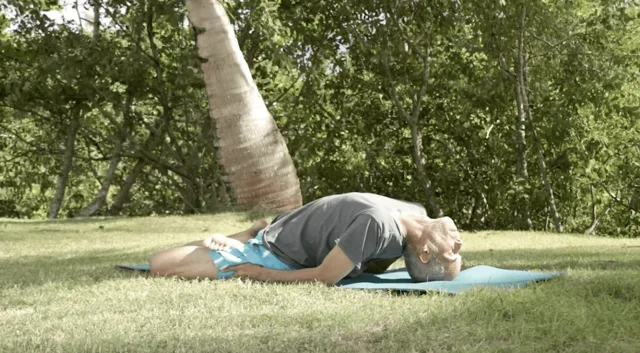 Fish PoseMatsyamudraEnergizes and relaxes
EasyAvoid with neck injury, high blood pressure or migraine. Practice after Shoulder Stand, for half its time
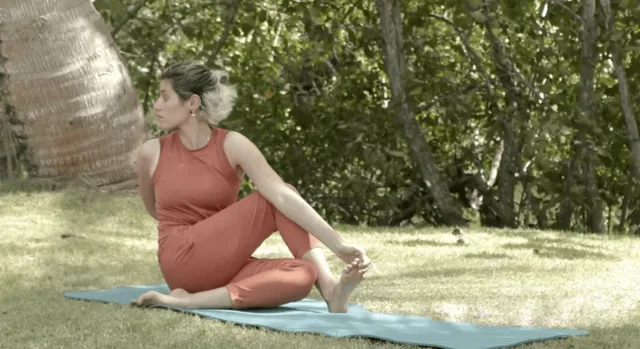 Spinal TwistMatsyendrasanaBrings calm and inner peace
EasyTwist gently with spine or disc problems or recent abdominal surgery. Avoid in the 2nd and 3rd trimesters of pregnancy
 Self MassageRelaxes the mind
EasyAvoid pressing on injuries, varicose veins or recent surgery
Move slowly and stop if anything hurts. Skip any pose whose caution applies to you. Fish Pose is meant to follow Shoulder Stand, as the caution says: if you haven’t learned that pose with a teacher, skip it for now. If you have a health condition or are pregnant, check with your doctor before starting a new practice.
Questions people ask
Why do I have more thoughts when I meditate?
You probably don't. You are just noticing them for the first time, because you've stopped to look. Noticing is the first step of meditation, so this is a sign it's working.
Should I try to push thoughts away?
No. Pushing gives a thought more energy. Simply notice it, name it if that helps, and return to your mantra or breath. If it comes back, return again.
How long until meditation gets easier?
Many people feel a difference within a few weeks of daily practice, but it varies. What matters most is sitting regularly. Short daily sittings do more than long ones now and then.
What should I do after the four weeks?
Keep a regular time and sit every day, even briefly. Use daily goals and reminders to stay on track, and think about learning from a teacher near you. Meditation keeps unfolding the longer you practice.