Guide 7 of 8 · Week 4: Going deeper
What Is a Mantra? (and What Baba Nam Kevalam Means)
A mantra is a short sound with a deep meaning. It gives a busy mind one kind thing to hold. Here is how it works and how to use one.
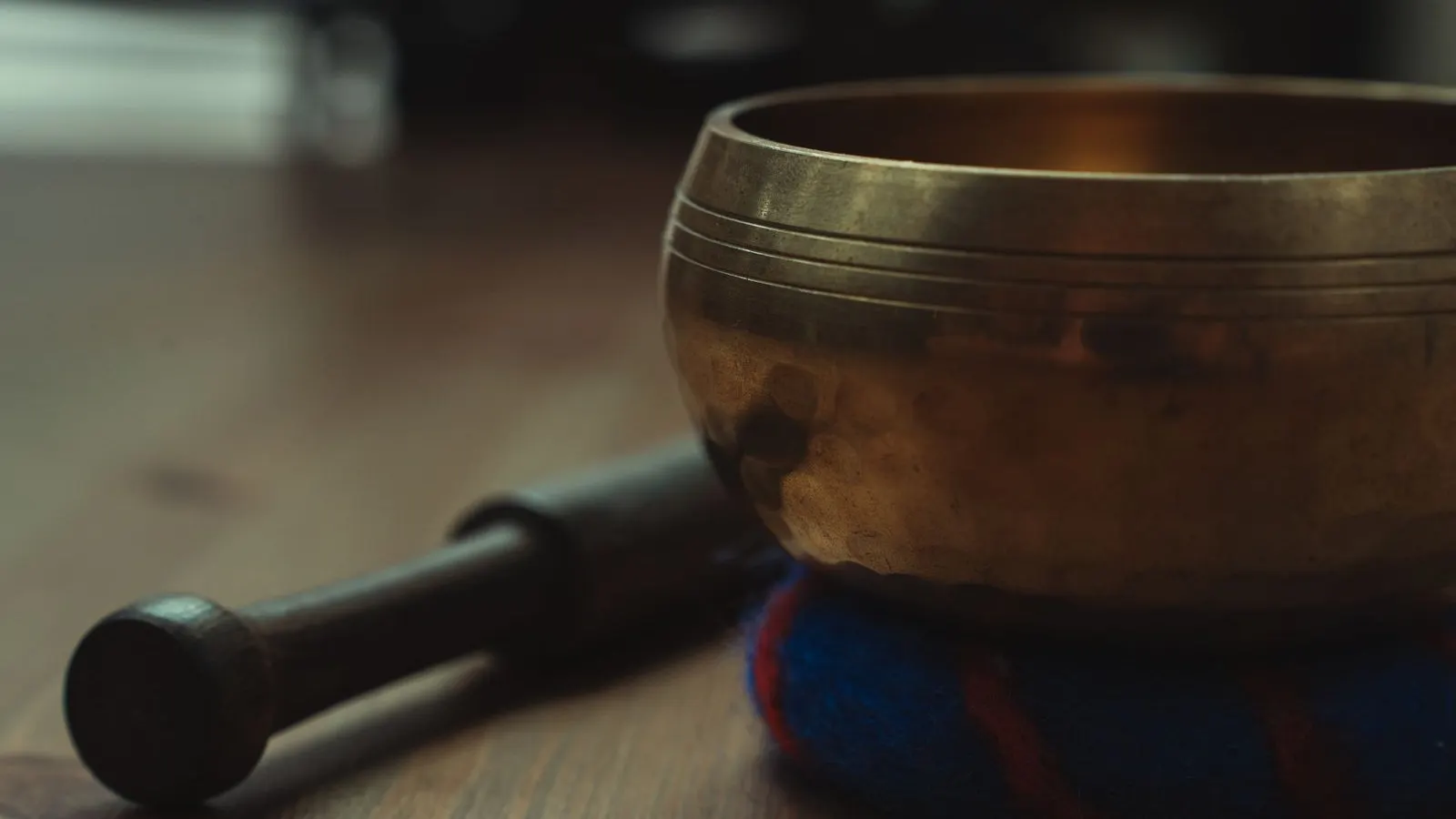
A mantra is a short sound, a word or a few words, that you repeat in meditation to help your mind grow calm and free. It gives the mind one simple, kind thing to rest on. A good mantra has two parts that work together: a sound with a pleasant rhythm, and a meaning that lifts you.
This guide goes with Week 4, Day 3 of 4 Weeks of Easy Bliss, the program in the Bliss app. Below you’ll find what the word means, why a mantra helps, what the program’s mantra means, and how to use it when you sit.
What the word means
Mantra is a Sanskrit word, usually explained in two parts: man, the mind, and tra, that which frees. So a mantra is a sound that helps free the mind.
In everyday terms, it gives your attention a steady, pleasant place to rest, so you’re less caught up in the usual stream of worries and plans. Sarkar, the teacher whose system this program draws on, defined it this way:
Mantra means “that collection of sounds meditation on which leads to liberation”
Shrii Prabhat Ranjan Sarkar, “Mantra Caetanya”, Discourses on Tantra Volume One
Why a mantra helps
Most beginners find that resting on a word is easier than resting on nothing. A word is something you can come back to. A mantra adds two more things that help.
A steady sound. Repeating a short phrase at an even pace gives the mind a rhythm to settle into, the way slow waves on a beach or a quiet lullaby can make you breathe more slowly. You don’t need to understand why. You only need to notice that it works.
A meaning that points somewhere good. Words carry feelings. In this tradition, repeating a word with a warm, wide meaning is meant to turn the mind toward that meaning, a little more each time. That’s why the meaning matters as much as the sound.
What Baba Nam Kevalam means
The mantra in this program is Baba Nam Kevalam (say it BAH-bah NAHM KAY-vah-lahm). Anyone can use it, whether you sing it aloud with music or repeat it silently when you sit.
Taken word by word: Baba means “beloved”, the one closest to your heart. Nam means “name”. Kevalam means “only”. So a literal reading is “only the name of the beloved”.
In this tradition, the beloved isn’t a distant figure. It’s the loving awareness at the heart of everything, including you. That’s why the mantra is often put in four plain words: love is all there is.
You don’t have to accept any of this as belief for the mantra to help. Many people simply keep a warm feeling in mind as they repeat it, such as the way they feel about someone they love.
How to use the mantra in meditation
The method is simple. Sit as you have been sitting, breathe naturally through your nose, and repeat the mantra silently while you hold its feeling.
Try it now
Ten minutes with Baba Nam Kevalam
- Sit upright and comfortable, hands in your lap. Close your eyes and let your breath find its own pace.
- Bring up a warm feeling. Remember a moment of love or peace. Notice where you feel it.
- Repeat Baba Nam Kevalam silently, at an easy, steady pace. Let each repetition carry the idea: love is all there is.
- Let the words do the work. There's no need to explain them to yourself each time. Keep a light, warm attention on them.
- When you drift, pick the mantra up again, gently. Then sit quietly for a minute before you open your eyes.
Some days the feeling will be strong. Other days the words will feel flat. Both are fine. Keep an easy pace, and let the feeling come and go on its own.
Singing the mantra: kiirtan
The same mantra can be sung out loud, to many different tunes. This is called kiirtan (KEER-tahn), which means singing or chanting the mantra, alone or with others, often with simple instruments. Many people find it the easiest way into meditation: a few minutes of kiirtan, and the mind is already quieter when you sit.
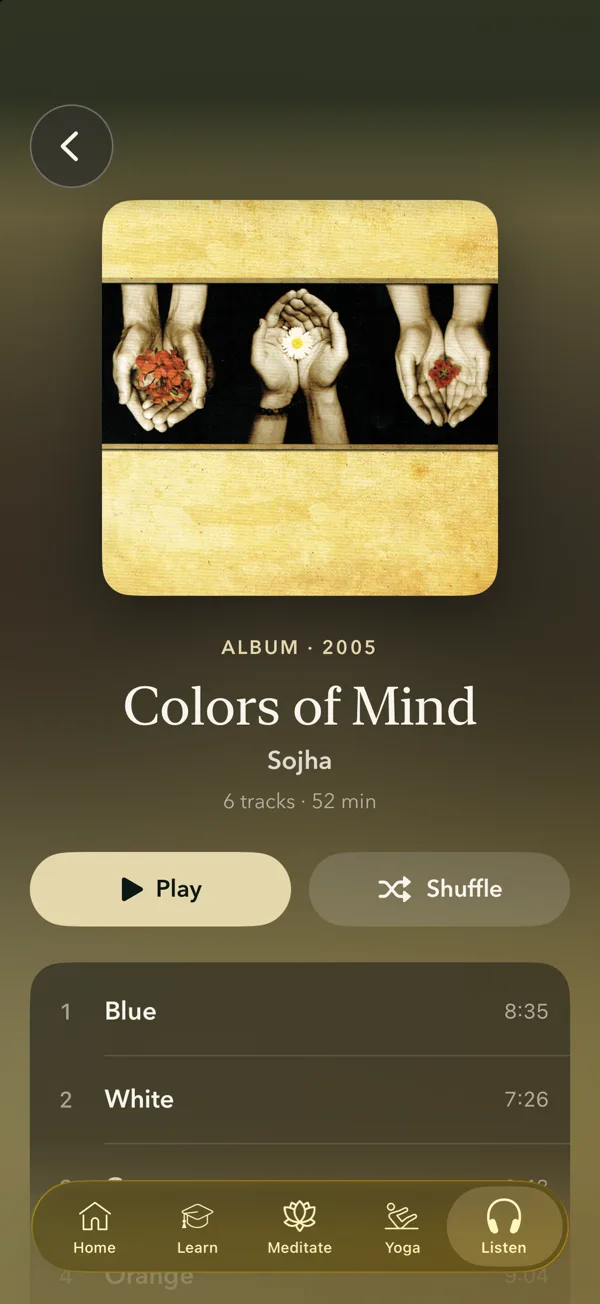
In Bliss, the Listen tab has sentient music, including albums by Sojha built on Baba Nam Kevalam. Play one before you sit, while you cook, or on a walk. There is also sleep music that turns itself off, if you’d like to drift off with the mantra at night.
What comes next
Using a mantra raises a fair question: what about all the other thoughts that keep showing up? The next guide covers what to do with them, and how to keep your practice going after the four weeks.
Ready the body
Today’s yoga: Strengthen the core
In the program, this lesson comes with 4 poses to do before you sit. Each one has a short video in the app that shows you how. This set includes a harder pose: if you’re new to yoga, watch its video first, or skip it and rest instead.
 Abdominal LockUddayana MudraSteadies focus
MediumEmpty stomach only. Avoid with high blood pressure, ulcer, hiatal hernia, heart disease or recent abdominal surgery
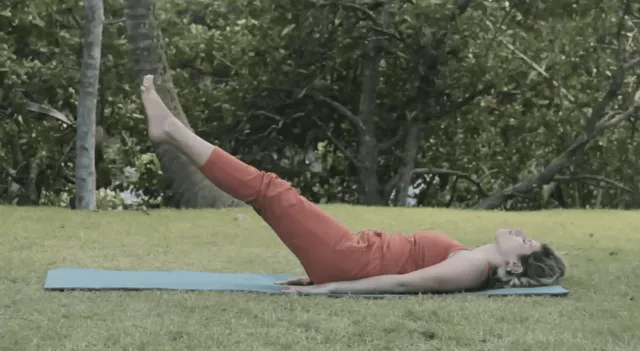 Easy Camel PoseUstrasanaSteadies focus
EasyGo gently with lower back problems or recent abdominal surgery
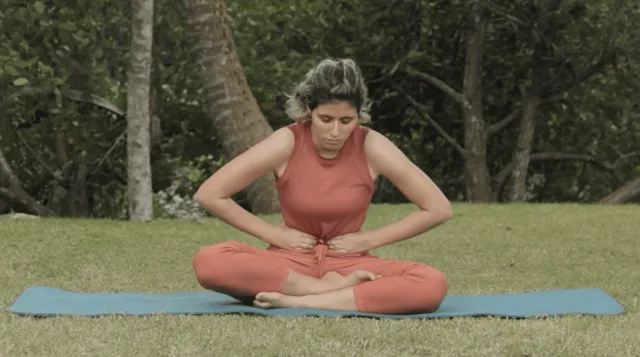 Fire StanceAgnisara MudraSharpens concentration
MediumEmpty stomach only. Avoid with hernia, ulcer, high blood pressure, heart disease or recent abdominal surgery
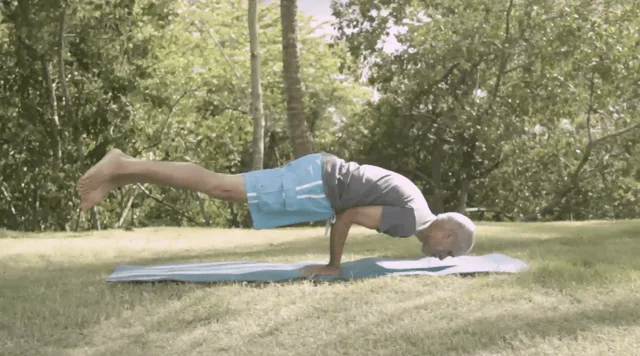 Peacock PoseMayurasanaEases fear and lethargy
HardEmpty stomach only. Avoid with high blood pressure, hernia, heart disease or wrist injury. Avoid in the 2nd and 3rd trimesters of pregnancy
Move slowly and stop if anything hurts. Skip any pose whose caution applies to you. If you have a health condition or are pregnant, check with your doctor before starting a new practice.
Questions people ask
Do I have to say the mantra out loud?
No. In meditation you repeat it silently, in your mind. Out loud, it is usually sung with music, which is called kiirtan. Both use the same words.
Do I need to understand Sanskrit?
No. You only need to know what the words point to. For Baba Nam Kevalam, that is the simple idea that love is all there is. Hold that feeling as you repeat the sound.
Is a mantra religious?
Mantras come from old spiritual traditions, but you don't have to believe anything to use one. Think of it as a tool for attention: a pleasant sound and an uplifting idea that give the mind somewhere to rest.
What if I lose the mantra and start thinking about other things?
That happens to everyone. When you notice, gently pick the mantra up again. Each time you come back, the habit of returning gets a little stronger.