Guide 6 of 8 · Week 3: Steadying the mind
How to Improve Your Concentration
Focus isn't something you have or don't have. It's something you build, one gentle return at a time. Here is how.

To improve your concentration, give your mind one clear thing to focus on, and every time it wanders, bring it back gently. Do this for a few minutes every day. Focus works like a muscle: it gets stronger each time you use it, and it grows with steady practice, not with strain.
This guide is part of Week 3, Day 2 of 4 Weeks of Easy Bliss, the program in the Bliss app. Below you’ll find why focus slips, how meditation trains it, five tips you can use today, and a short practice.
Why your focus slips
You sit down to read, and three pages later you realize you haven’t taken in a word. You were thinking about a bill, or something a friend said, or what to cook tonight. Sound familiar?
That’s not a flaw in you. Attention goes to whatever feels most urgent or most familiar, and most of us spend the day training it to jump: a notification here, a new tab there, a quick look at the news. The mind gets good at whatever it practices. If it practices jumping, it jumps.
The good news is that this works the other way too. Practice staying, and the mind gets better at staying.
How meditation trains focus
Meditation is a simple, repeatable way to practice staying. You pick one thing to attend to, such as the breath or a mantra. Soon your attention slips away. When you notice, you bring it back. That’s the whole exercise.
Notice what you’re not doing. You aren’t trying to wipe the mind clean, which no one can do. And you aren’t wrestling with each thought. You’re giving your attention one place to come home to, and then coming home, as often as it takes.
The place you choose matters, because whatever you return to again and again starts to color your mood. Yogis have said this for a very long time.
As one thinks so one becomes.
Shrii Prabhat Ranjan Sarkar, “Microcosm and Macrocosm” (1956), in Ananda Marga Ideology and Way of Life in a Nutshell, Part 6
So pick something calm and warm, like a mantra with a good meaning. Many people find it steadying, and with practice that steadiness can become more familiar.
Like learning to balance
Think of standing on one foot. At first you wobble and put the other foot down every few seconds. You don’t scold yourself. You just lift it again. Day by day the wobbles get smaller, and you catch them earlier.
Focus grows in a similar way. You won’t stop drifting, but with practice you tend to notice sooner and drift less far.
Thoughts don’t stop coming. What changes is how much they pull you. A sound outside, an itch, a plan for later: you notice it, and it passes, and you’re still with your point of focus.
Five tips to improve your concentration
These work in meditation, and most of them work in the rest of your day too.
- Do one thing at a time. Attention doesn’t really split in two. When you read, just read. When you eat, just eat. Multitasking is really fast switching, and every switch costs you a little focus.
- Clear the space first. Put your phone out of reach and close the door. Focus is easier when fewer things are asking for it.
- Choose a clear point of focus, and stay with it. The breath or a mantra both work well. Pick one and keep it, rather than trying something new every day. A point of focus that you find meaningful is easier to stay with than a dull one.
- Sit for a short time, often. Five or ten minutes every day trains focus better than one long, tiring session a week. Twice a day, morning and evening, is even better once you’re ready.
- Be kind when you drift. Scolding yourself is just one more distraction. A calm “oh, I wandered” and a gentle return is all it takes. Every return counts.
Try it now
A five-minute focus practice
- Sit upright and comfortable. Close your eyes and take three slow breaths.
- Rest your attention on the breath, where you feel it most: the nose, the chest or the belly.
- Count each out-breath, from one up to ten. Then start again at one.
- If you lose count or find yourself past ten, smile and start again at one. That moment of noticing is the training.
- After five minutes, let the counting go and sit quietly for a few breaths before you open your eyes.
If you’d rather use a mantra, skip the counting: repeat the mantra silently and come back to it each time you drift. Keep one point of focus either way.
Don’t worry about how high you get. Starting over at one many times is a sign that you are noticing, which is exactly the skill you’re building.

Small and steady
There’s no shortcut to steady focus. It builds the way fitness does, through small efforts repeated over time.
So protect the habit more than the length. On a busy day, two minutes is better than none, because it keeps the rhythm alive. Over time, sitting can start to feel like a normal part of your day, something you’d miss if you skipped it.
And the benefit doesn’t stay on the cushion. The focus you train in meditation comes with you into work, study, conversations and play. Almost anything you want to do well goes better when your mind is in one place.
In Bliss, sessions can start with mantra music and then move into silence with gentle bells, which gives your focus a soft place to begin. Guided meditations by Dada Nabhaniilananda (The Monk Dude) are there too, if you’d like a voice to follow.
What comes next
A mantra is one of the most helpful points of focus there is. The next guide explains what a mantra is, why sound helps the mind settle, and how to use one when you sit.
Ready the body
Today’s yoga: Poses for concentration
In the program, this lesson comes with 4 poses to do before you sit. Each one has a short video in the app that shows you how. This set includes a harder pose: if you’re new to yoga, watch its video first, or skip it and rest instead.
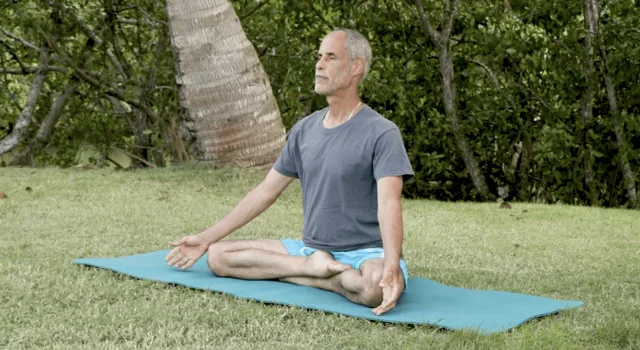 Meditative PosesDhyanasanasDeepens concentration
EasyUse a cushion with knee or hip problems; never force lotus
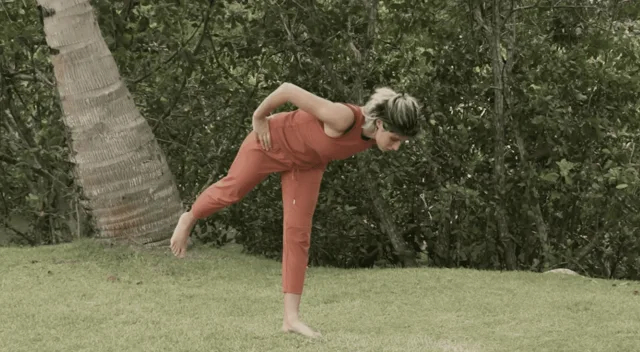 Balance PoseTuladandasanaBrings mental balance and stability
MediumUse a wall with balance problems or vertigo. Go gently with lower back pain
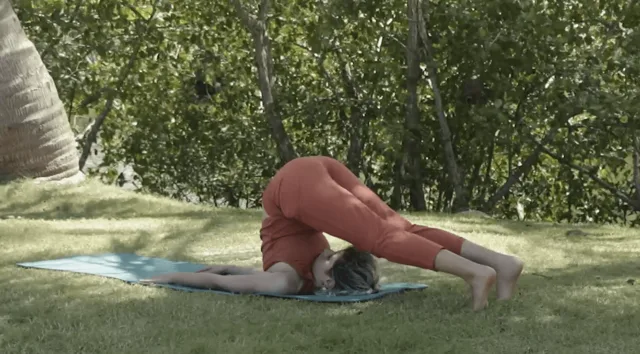 Half Shiva PoseArdha ShivasanaSharpens concentration
HardEnter from Plough Pose, after Shoulder Stand. Avoid with glaucoma, high blood pressure, heart disease or neck injury
 Seated BowYogamudraStrengthens willpower
EasyAvoid with glaucoma. Go gently with back, disc or knee problems
Move slowly and stop if anything hurts. Skip any pose whose caution applies to you. Half Shiva Pose is meant to follow Shoulder Stand, as the caution says: if you haven’t learned that pose with a teacher, skip it for now. If you have a health condition or are pregnant, check with your doctor before starting a new practice.
Questions people ask
Can meditation improve concentration?
Meditation is concentration practice. You rest your attention on one thing, notice when it wanders, and bring it back. Doing that every day trains the mind to stay longer and to notice sooner when it drifts.
How long does it take to improve focus?
It varies from person to person. Many people notice small changes within a few weeks of daily practice, such as catching themselves sooner when they drift. Steady daily practice matters more than long sessions.
Why can't I concentrate even when I try hard?
Forcing focus usually makes the mind more restless. Concentration grows from gentle, repeated returning, not from strain. Relax, pick one clear point of focus, and come back each time you notice you've wandered.
What should I focus on when I meditate?
Something simple that you can return to easily, like the breath or a mantra. Pick one and stay with it, rather than switching each time. A mantra also gives the mind a deeper, positive idea to rest in.