Guide 5 of 8 · Week 3: Steadying the mind
Meditation or Mindfulness? The Difference, and How to Do Both
Mindfulness usually happens with your eyes open, in the middle of your day. Meditation, as we teach it here, happens when you sit and turn inward. They are two sides of the same skill.

Mindfulness is giving your full attention to the moment you are in. Meditation is sitting still and turning that attention inward, so it can settle and go deeper. The two overlap, and many teachers treat mindfulness as one kind of meditation. Here we use the words simply: mindfulness for open-eyed attention during the day, meditation for the inward sitting practice. Both train the same thing, your ability to keep your mind in one place. So the real answer to “which one?” is both, a little each day.
This guide is part of Week 3, Day 1 of 4 Weeks of Easy Bliss, the program in the Bliss app. Below you’ll find what each one is, how they help each other, easy ways to be mindful in an ordinary day, and a short practice for coming back to now.
What mindfulness is
Think of the last time you ate a meal. Did you taste it? Or were you reading, scrolling, or going over a talk you had earlier? Most of us spend a big part of each day somewhere other than where we are.
Mindfulness is the habit of being where you are. When you drink tea, you notice the warmth of the cup and the taste. When a friend talks, you hear them, rather than planning what you’ll say next.
It doesn’t need a special place or time. It happens with your eyes open, in the middle of ordinary life. That is what makes it so useful. And it is also what makes it hard, because ordinary life is full of things pulling at you.
What meditation is
Meditation takes the same skill and gives it a quiet place to grow. You sit, close your eyes, and rest your attention on one thing, such as your breath or a mantra.
It doesn’t ask you to empty your mind. Thoughts will come, and that’s fine. You keep coming back to the one thing you chose, and having that one thing to come back to is what makes the practice work.
Over time, meditation takes your attention inward, below the busy surface of thoughts, toward a deeper quiet. In this program, that inward turn is the main thing that sets meditation apart from mindfulness in daily life.
How each one helps the other
Meditation makes mindfulness easier. When you sit each morning, your mind gets used to coming back to one place. Later, in the kitchen or at your desk, it comes back more easily there too.
Mindfulness makes meditation easier. If you spend the whole day rushing and half-present, you sit down with a mind that is racing. If you’ve spent the day doing one thing at a time, you sit down already a little calmer.
It works a bit like learning to swim. The pool is where you practice the strokes. The open water is where you use them. You need both, and each one makes you better at the other.
Easy ways to be mindful in an ordinary day
You don’t need to be mindful all day. That’s too much to ask at first. Pick one task and give it your full attention, every day this week.
- Eating. Take the first three bites slowly, with no phone or screen. Notice the taste, the texture, the warmth. You may find you enjoy the food more.
- Walking. On a short walk, feel each foot touch the ground. Notice the air on your face and the sounds around you. When you find yourself planning, come back to your feet.
- Washing up. Feel the warm water and the weight of each dish. It’s a plain task, which makes it a good one: there is nothing to do but be there.
- Listening. In your next talk with someone, let them finish before you start forming your reply. Just listen.
- Waiting. In a queue or at a red light, instead of reaching for your phone, take one slow breath and look around.
When you notice you’ve drifted, don’t scold yourself. Just come back. That’s the same move you make in meditation, used in a new place.

A short practice for arriving
This takes about three minutes. You can do it sitting at your desk, on a bench, or before you begin a meditation.
Try it now
Three minutes of being here
- Stop what you are doing and sit or stand still. Let your shoulders drop.
- Notice five things you can see. Name each one silently: "window", "cup", "light on the wall".
- Notice three things you can hear, near and far. Don't judge them. Just hear them.
- Feel your body where it touches the chair or the floor. Feel your weight.
- Close your eyes and follow three slow breaths, in and out. If a thought pulls you away, notice it and come back.
- Open your eyes and carry on with what you were doing, a little more here than before.
The outward part, seeing and hearing, is mindfulness. The last step, closing your eyes and turning inward, is the start of meditation. You’ve just done both.
In Bliss, a meditation session can begin with a few minutes of mantra music, then move into silence with gentle bells. It is an easy way to go from the busy outside world to the quiet inside one.
Mindfulness is learning to show up for your life. Meditation is learning to show up for yourself.
Why it matters what you hold in mind
Whatever you give your attention to again and again starts to shape you. If your mind spends the day replaying worries, worry tends to get stronger. Giving it regular time to rest in calm is the aim of practice.
That’s the quiet gift of doing both. Mindfulness keeps you from being dragged around by your thoughts during the day. Meditation gives your mind something deep and good to return to. Together, they let you choose, a little more each week, where your mind lives.
If you’d like to go deeper into any of this, you can ask BLISS AI in the app. Its answers are rooted in the teachings, with the original passages one tap away.
What comes next
Both mindfulness and meditation come down to one thing: focus. The next guide looks at why focus slips, how to train it, and five tips you can use today.
Ready the body
Today’s yoga: Strengthening the back
In the program, this lesson comes with 4 poses to do before you sit. Each one has a short video in the app that shows you how.
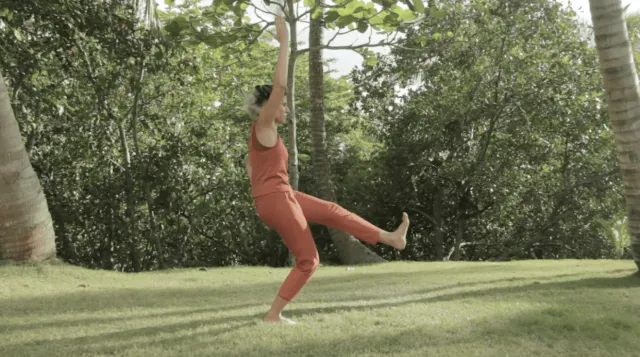 Double Right Angle PoseDvisamakonasanaBrings mental balance and stability
EasyGo gently with lower back or shoulder problems
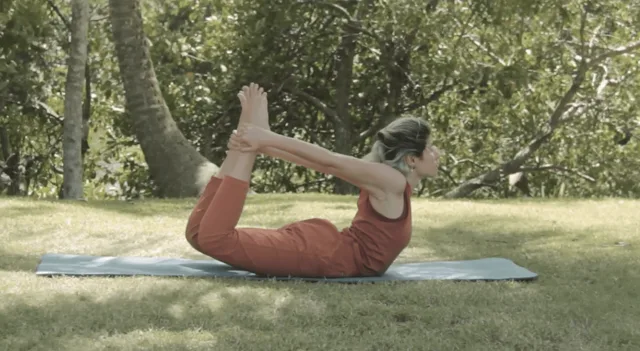 Boat PoseNaukasanaBrings peace and calm
EasyAvoid with back or disc problems, hernia or recent abdominal surgery. Avoid in the 2nd and 3rd trimesters of pregnancy
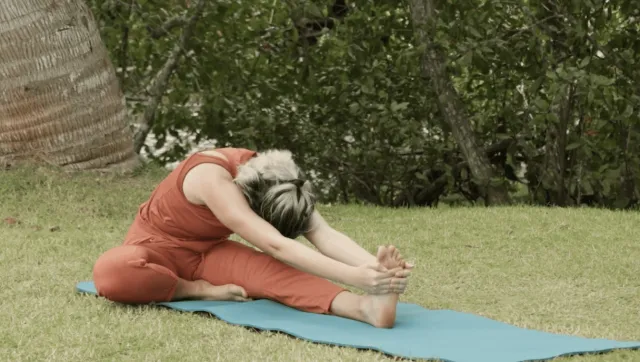 Head to Single Knee PoseJanu ShirasanaLifts idleness and laziness
EasyFold from the hips with disc problems or sciatica. Go gently with knee or ankle injury
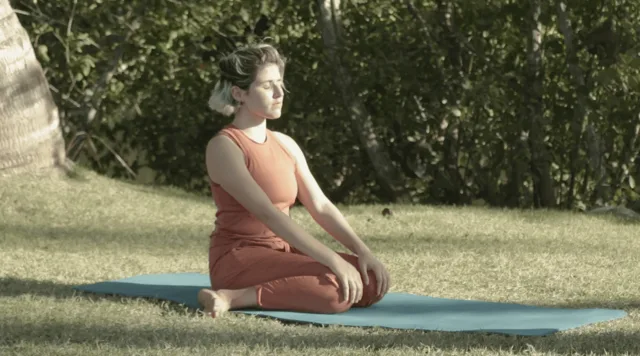 Thunder PoseVajrasanaRelaxes and settles the mind
MediumGo gently at first and never force the posture. Use a cushion with knee or ankle problems
Move slowly and stop if anything hurts. Skip any pose whose caution applies to you. If you have a health condition or are pregnant, check with your doctor before starting a new practice.
Questions people ask
Is mindfulness the same as meditation?
They overlap, and many teachers treat mindfulness as one kind of meditation. In this program, mindfulness means full attention on the present as you go about your day, and meditation means a sitting practice where you turn your attention inward and let it settle. Both use the same skill of focus, so each makes the other easier.
Which should I start with?
Start with a short daily sitting, because it trains your focus in a quiet setting. Then bring a little of that focus into one ordinary task each day. Doing both, a little at a time, works better than doing a lot of only one.
Can I be mindful while I work?
Yes. Do one task at a time, give it your full attention, and come back when you notice you've drifted. A few slow breaths between tasks also helps you arrive in the next one.
Do I have to stop thinking to be mindful?
No. Thoughts will still come. Being mindful means noticing when they've carried you off, and coming back to what is in front of you: the taste of the food, the person talking, the step you are taking.