Guide 4 of 8 · Week 2: Turning within
How to Let Go: A Simple Practice
Holding on takes more effort than we notice. Here is a simple way to feel it, and a practice for letting go with the breath.

To let go, you first notice what you’re holding, then you ease off, often with the help of a long, slow out-breath. It sounds simple, and it is. It isn’t always easy, but it gets easier with practice.
This guide is Week 2, Day 5 of 4 Weeks of Easy Bliss, the program in the Bliss app. Below you’ll find a one-minute experiment, why we hold on so tightly, and a short practice you can use today.
A one-minute experiment
Here’s a quick way to feel what holding on costs. Take a normal breath in and hold it, just a few seconds longer than feels natural. (Skip this if holding your breath is uncomfortable for you.)
Notice what happens. Your chest and throat tighten. The urge to breathe out grows stronger by the second. It’s hard to think about anything else.
Now breathe out, slowly and fully. Notice your chest and shoulders soften, and the small wave of relief.
Holding on to a grudge, a worry or a plan works in a similar way. The difference is that it happens in the mind, so we can keep it up for years without noticing the strain. It takes steady effort, and it quietly keeps part of our attention busy all day.
What are you holding?
Take a moment to ask yourself: what do I keep holding on to, even though I know it doesn’t make me happy?
For most people it’s nothing dramatic. Small things, held tightly:
- A plan for how the day, a person or your life should go, and the frustration when it doesn’t.
- A grudge against someone who hurt you, replayed again and again.
- A craving: one more snack, one more check of the phone, one more purchase.
- A worry you turn over and over, as if holding it tighter could solve it.
Each one feels important while you’re holding it. But the holding itself is what keeps you stuck, and it quietly uses up energy you could spend elsewhere.
The first step is simply to notice. No blame. Just “Ah, I’m holding on again.”
Why we hold on so tightly
We hold on because, somewhere along the way, we decided we need that thing in order to be okay. The plan has to work out. The other person has to apologize. The craving has to be fed. So letting go feels risky, as if we’d lose something we can’t do without.
Yet think back over the things you’ve wanted most. Getting them was lovely, and then, fairly soon, there was a next thing. The restlessness moved on to something new. Yogis noticed this long ago.
It is one of the human wonts that human beings are never satisfied with something finite. They are never satisfied with something limited.
Shrii Prabhat Ranjan Sarkar · Mysticism and Yoga, in Yoga Psychology
In the yogic view, this isn’t a flaw to be ashamed of. It’s a sign that what we’re really after is bigger than any single thing we could hold. Meditation is how yogis go looking for it, by turning inward. You don’t have to accept the whole philosophy to use the practice. You only have to notice when you’re holding on, and choose to ease off.

A simple letting-go practice
This practice uses the out-breath. Breathing out is the body’s own way of letting go: the chest falls, the shoulders drop, the muscles soften.
Try it now
Five minutes of letting go
- Sit comfortably, back upright, and close your eyes. Rest your hands in your lap.
- Name what you're holding. Silently, in a word or two: "the meeting", "that comment", "sugar".
- Find where you hold it in the body. A tight jaw, raised shoulders, a knot in the belly, clenched hands.
- Breathe in normally. Then let the out-breath be long and slow, and as you breathe out, soften that spot. Think "let go" as you exhale.
- Repeat for a few minutes. If the thought comes back, that's fine. Notice it, breathe out, and soften again.
- Rest at the end. Let the breath find its own rhythm and enjoy the space you've made.
Letting go during the day
You can carry this practice with you. The moment you notice yourself tensing up, try one of these:
- Three long out-breaths. In the car, at your desk, in line at the shop. Let each one be slower than the last.
- Drop your shoulders. Let them fall away from your ears and loosen your jaw. The body often leads the mind.
- Ask one question. “Is holding this helping me?” If the honest answer is no, breathe out and set it down, even for a minute.
Some things will come back many times. That’s normal. Each time you notice and ease off again, the hold gets a little weaker.
What comes next
With the body softer and the mind a little lighter, you’re ready to look at the mind itself. In Week 3 we turn to a common question: what’s the difference between meditation and mindfulness? Read the next guide.
Ready the body
Today’s yoga: Relaxation and recovery
In the program, this lesson comes with 4 poses to do before you sit. Each one has a short video in the app that shows you how.
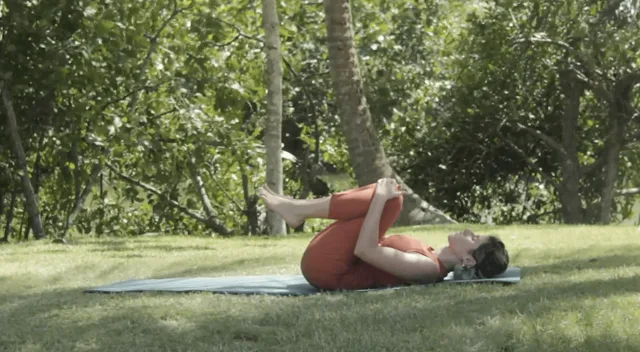 Bellows PoseBhastrikasanaCalms and settles the mind
EasyAvoid with hernia or recent abdominal surgery
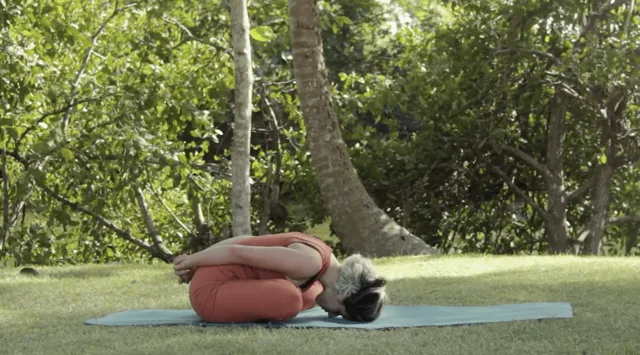 Seated BowYogamudraStrengthens willpower
EasyAvoid with glaucoma. Go gently with back, disc or knee problems
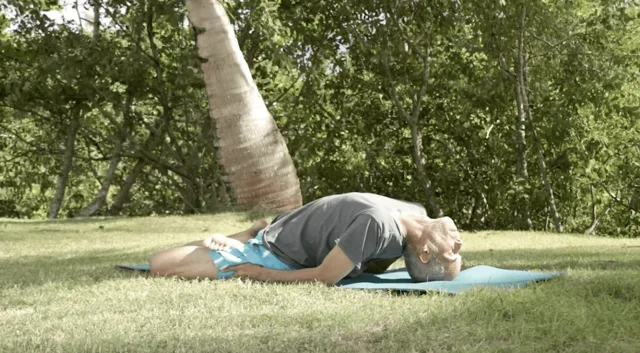 Fish PoseMatsyamudraEnergizes and relaxes
EasyAvoid with neck injury, high blood pressure or migraine. Practice after Shoulder Stand, for half its time
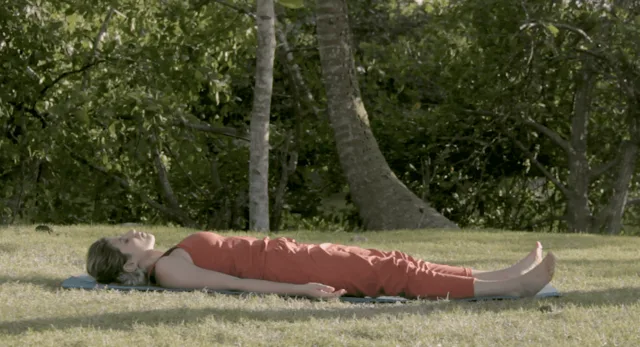 Deep Rest PoseShavasanaOpens the heart to compassion and love
EasyBend the knees if the lower back is uncomfortable
Move slowly and stop if anything hurts. Skip any pose whose caution applies to you. Fish Pose is meant to follow Shoulder Stand, as the caution says: if you haven’t learned that pose with a teacher, skip it for now. If you have a health condition or are pregnant, check with your doctor before starting a new practice.
Questions people ask
What does letting go actually mean?
It means easing your hold on something you keep carrying even though it hurts you, like a grudge, a craving or a plan that has to go exactly your way. You don't have to stop caring. You just stop straining.
Is letting go the same as giving up?
No. Giving up means you stop trying. Letting go means you stop straining over it. You can still work toward what matters to you, just with less tension.
Why is it so hard to let go?
Because holding on feels like protection. If we let go of the plan or the grudge, it seems something bad might happen. With practice, many people find they are still okay when they ease off, and the hold starts to loosen.
How long does the letting-go practice take?
Five minutes is a good place to start. You can also use just three long out-breaths any time you notice yourself tensing up during the day.